In recent years, the consumer electronics market—led by mobile devices such as smartphones and tablets—has experienced rapid growth, with a clear trend toward smaller, lighter, and thinner devices.
As a result, traditional PCBs can no longer meet product requirements. Consequently, major manufacturers have begun researching new technologies to replace PCBs, and among these, FPCs—as the most favored technology—are becoming the primary connectivity components for electronic devices.
Additionally, the rapid rise of emerging consumer electronics markets, such as wearable smart devices and drones, has created new growth opportunities for FPC products.
At the same time, the trend toward displays and touchscreens in various electronic products has expanded the application scope of FPCs through small- and medium-sized LCDs and touchscreens, driving increasing market demand.
FPC
1. What is FPC?
FPC (Flexible Printed Circuit) is a type of PCB, also known as a “flex board.”
FPC is made from flexible substrates such as polyimide or polyester film. It features high wiring density, light weight, thin profiles, bendability, and high flexibility.
They can withstand millions of dynamic bends without damaging the conductors, allowing for arbitrary movement and expansion according to spatial layout requirements.
This enables three-dimensional assembly, achieving an integrated effect of component mounting and conductor connection—offering advantages unmatched by other types of circuit boards.
(Multi-layer FPC circuit board)
2. Applications of FPC
Mobile Phones: Leveraging the lightweight and thin profile of flexible circuit boards, they effectively reduce product volume and easily integrate batteries, microphones, and buttons into a single unit;
Computers and LCD Screens: Utilizing the integrated circuit layout and thin profile of flexible circuit boards, digital signals are converted into images and displayed on LCD screens;
CD Players: By leveraging the three-dimensional assembly capabilities and thin profile of FPCs, bulky CD players are transformed into portable devices;
Disk Drives: Whether hard drives or floppy disks, they rely heavily on the high flexibility and ultra-thin 0.1mm profile of FPCs to enable rapid data access in both PCs and notebooks;
Latest Applications: A key component in the suspension circuits and packaging boards of hard disk drives (HDD).
PCB
1. What is a PCB?
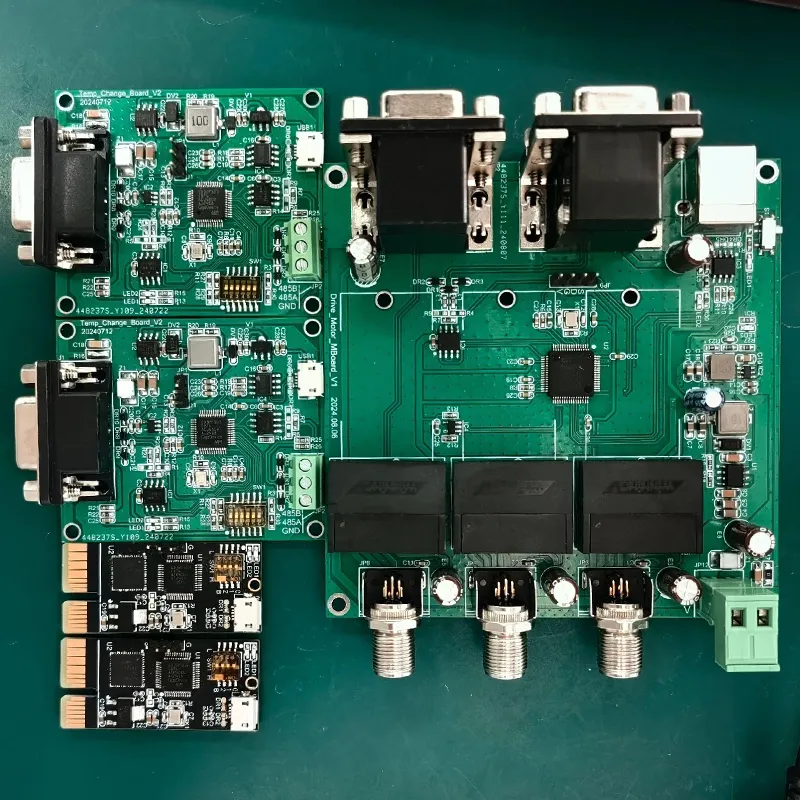
PCB (Printed Circuit Board), also known as a printed circuit board, is one of the most important components in the electronics industry.
Virtually every electronic device—from small items like digital watches and calculators to larger ones such as computers, communication equipment, and military weapon systems—requires a printed circuit board for electrical interconnection whenever it contains electronic components such as integrated circuits.
In the research and development of larger electronic products, the most fundamental factors for success are the design, documentation, and manufacturing of the product’s printed circuit board.
The quality of PCB design and manufacturing directly impacts the overall product quality and cost, and can even determine success or failure in commercial competition.
2. The Role of PCBs
The adoption of PCBs in electronic devices eliminates errors associated with manual wiring due to the consistency of standardized PCBs.
It enables automated component insertion or placement, automated soldering, and automated testing, thereby ensuring product quality, improving labor productivity, reducing costs, and facilitating maintenance.
3. Development of PCBs
PCBs have evolved from single-layer to double-sided, multilayer, and flexible types, each continuing to follow its own development trajectory.
As they continue to advance toward higher precision, higher density, and greater reliability—while simultaneously reducing size, lowering costs, and improving performance—PCBs will maintain strong vitality in the future development of electronic devices.
In summary, domestic and international discussions on future trends in PCB manufacturing technology are largely consistent: the industry is moving toward high density, high precision, fine via diameters, fine trace widths, fine pitch, high reliability, multilayer structures, high-speed transmission, lightweight, and thin-profile designs.
Concurrently, production is evolving toward increased productivity, reduced costs, minimized pollution, and the ability to accommodate high-mix, low-volume production.
The technological advancement of printed circuit boards is generally represented by the line width, via diameter, and board thickness-to-via diameter ratio on the PCB.